Pathophysiology
A rare, paraneoplastic syndrome associated with tumor burden1,2
Non-islet cell tumor hypoglycemia (NICTH) is associated with malignant or benign extra-pancreatic tumors that secrete variants of insulin-like growth factor 2 (IGF-2), which activate insulin receptors.
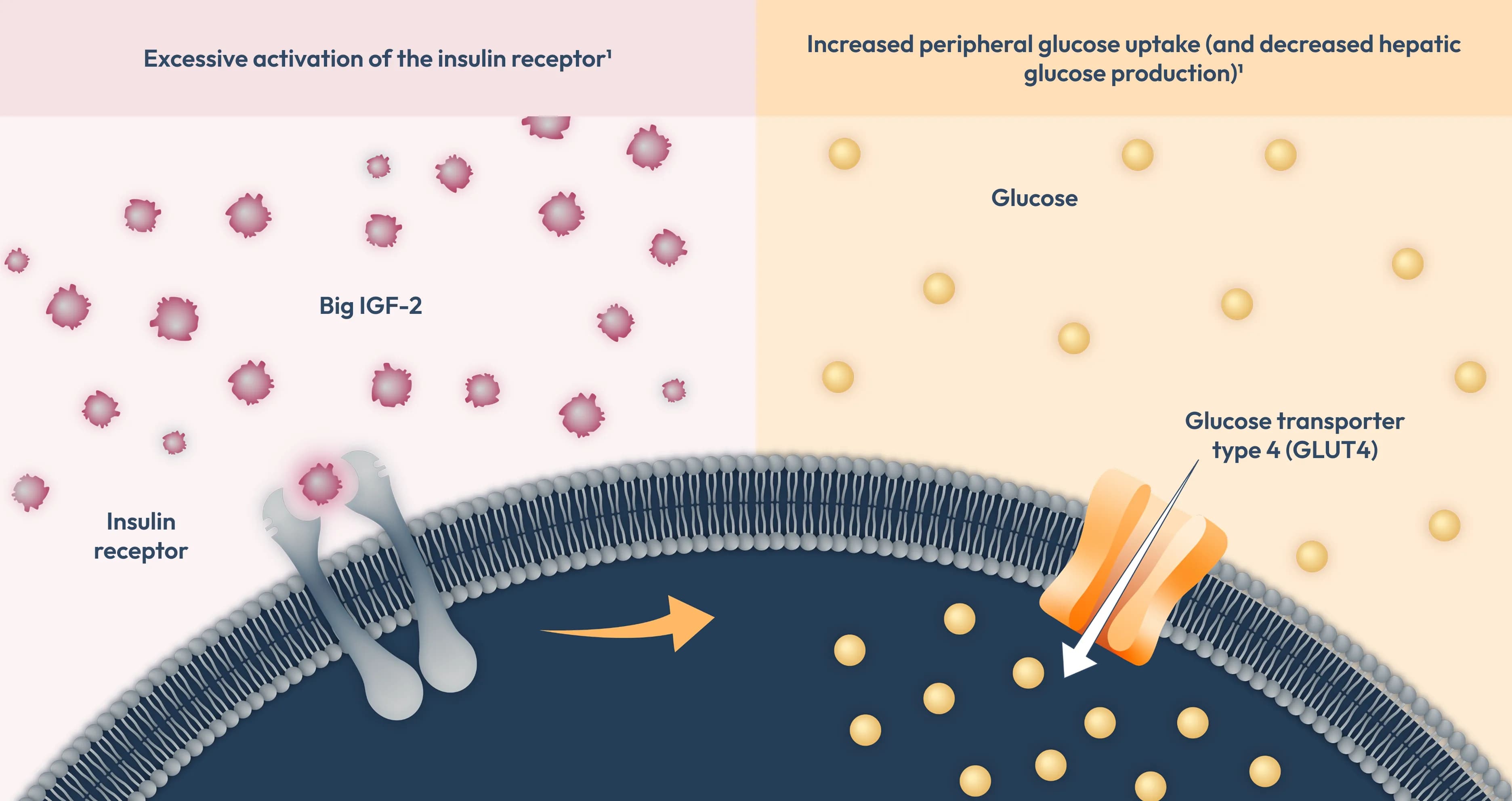
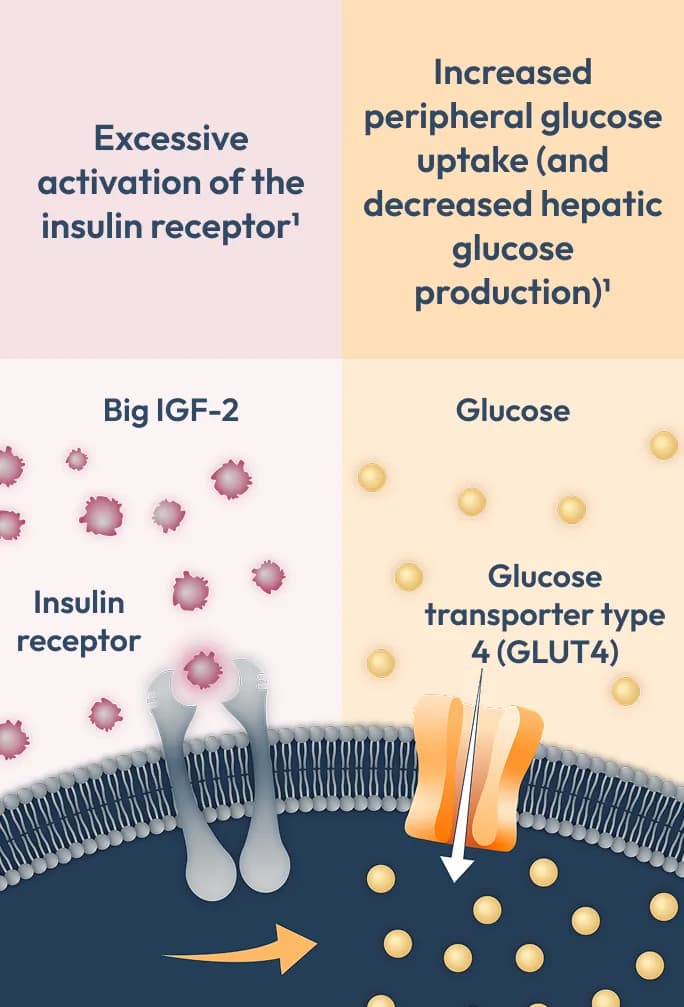
Increased bioavailability of an intermediate molecule called "big" IGF-2 suppresses glucose production and increases peripheral glucose uptake, leading to recurrent IGF-2-mediated hypoglycemia.

Occurs globally in 2 to 15 people per million per year3

Affects patients in older age, commonly >50 years old2
Tumors are typically of mesenchymal or epithelial origin1,4
More than 15 tumor types are known to be associated with the big IGF-2 production responsible for NICTH, including1,2,4:
- Hepatocellular carcinoma (most prevalent)
- Gastrointestinal stromal tumor
- Fibrosarcoma
- Mesothelioma
- Colorectal cancer
- Hemangiopericytoma
- Solitary fibrous tumor
- Renal cell carcinoma
- Etc
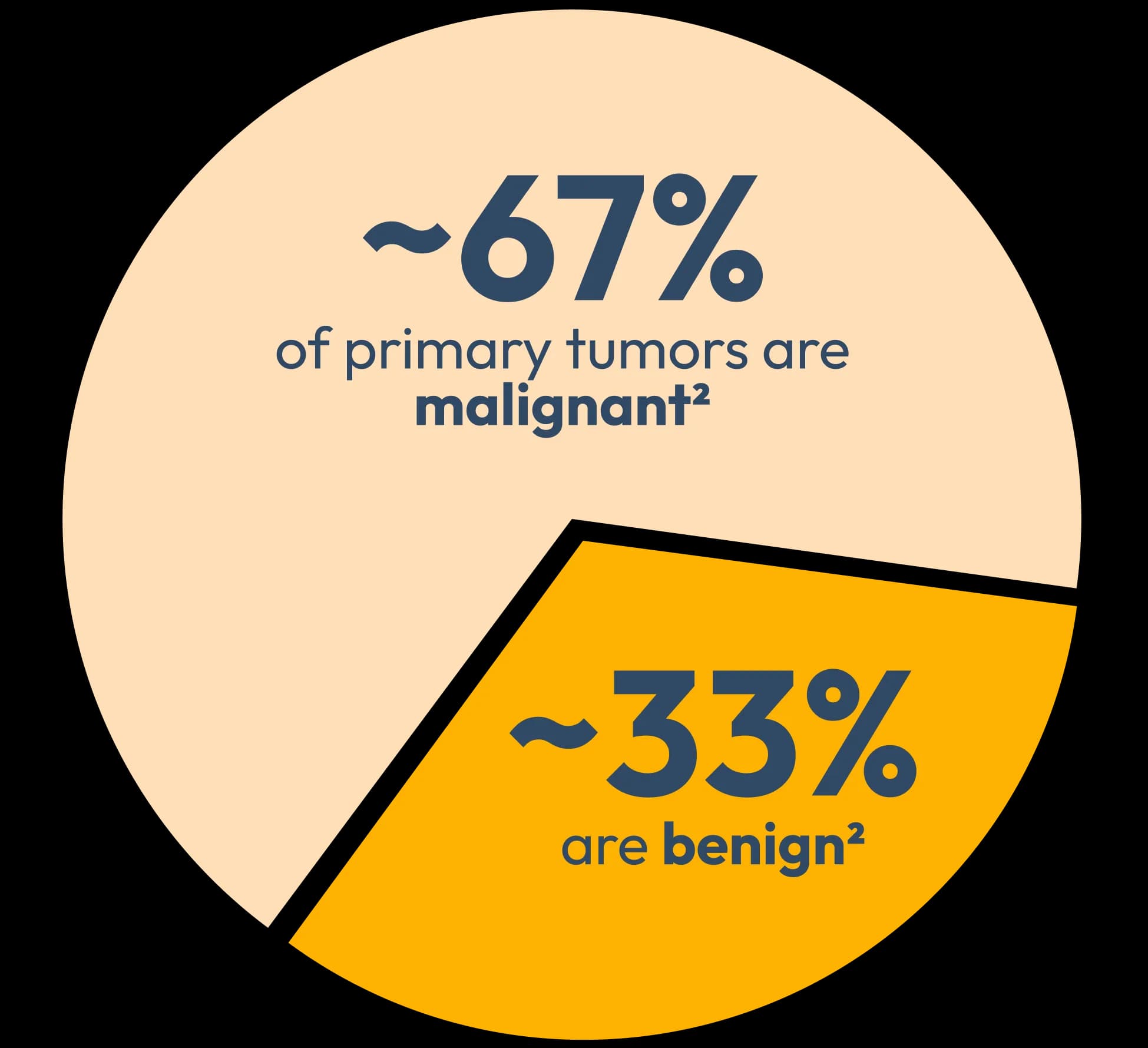
Hypoglycemia in non-islet cell tumors typically occurs in the presence of advanced disease or tumor growth.2
Repeated episodes of hypoglycemia can negatively impact the efficacy of chemotherapy, making early recognition crucial.1
IGF-2 mimics insulin, leading to recurrent hypoglycemia1
Typically, IGF-2 is translated into the prepro-IGF-2 peptide, which consists of 3 domains: the N-terminal peptide, the mature IGF-2, and the C-terminal extension, known as the E-domain.1

Formation of big IGF-2
In non-islet cell tumor hypoglycemia (NICTH), an intermediate molecule composed of the mature IGF-2 domain and part of the E-domain is formed, referred to as “big” IGF-2.1

Increased bioactivity
Unlike mature IGF-2, big IGF-2 has a higher affinity for the insulin receptor, increasing its bioactivity.1

Persistent uptake of glucose
Increased circulation of big IGF-2 and its precursors promotes excessive peripheral uptake of glucose in adipose tissue and muscles, and decreases hepatic glucose production, leading to recurrent hypoglycemia.1

Understand the presenting features of NICTH
Presentation & Diagnosis
References: 1. Karamanolis N, et al. Paraneoplastic hypoglycemia: an overview for optimal clinical guidance. Metab Open. 2024;23(100305):1-9. doi:10.1016/j.metop.2024.100305 2. Bodnar T, et al. Management of non-islet cell tumor hypoglycemia: a clinical review. J Clin Endocrinol Metab. 2013;99(3):713-722. doi:10.1210/jc.2013-3382 3. Ghosh N, et al. Non-islet cell tumor-related hypoglycemia in a case of metastatic gastrointestinal stromal tumor: a rare paraneoplastic syndrome: a case report. Apollo Medicine. 2022;19(4):276-279. 4. De Groot J, et al. Non-islet cell tumor-induced hypoglycemia: a review of the literature including two new cases. Endocr Relat Cancer. 2007;14(4):979-993. doi:10.1677/ERC-07-0161


